



Don’t overlook spark plug replacement, reminds DENSO
Put in its simplest form, the purpose of a spark plug is to provide the spark – a high voltage electrical charge that ‘jumps’ the gap between its electrodes – that ignites the fuel and air mixture that enters the combustion chamber in the cylinder head, to power the engine. It is, therefore, a vital component, so only high quality spark plugs, such as those manufactured by DENSO, should be fitted.
However, in common with almost every vehicle component, spark plugs only have a certain lifespan, but what are the most common reasons why they lose performance and need replacement?
The primary reason that spark plugs need replacement is due to erosion to the electrode, which is caused by the aggressive nature of the spark itself. Each time the spark jumps the gap, it erodes an almost immeasurably small amount of material from the electrodes. However, over its lifespan, this will happen millions of times, which gradually increases the gap and reduces the efficiency of the spark, affecting engine performance and increasing exhaust emissions and fuel consumption. In addition, if the gap becomes too wide, as well as a drop in engine efficiency, extra strain is put on the ignition coil for example, as it needs to generate a higher voltage for the spark to jump the larger gap.
The amount of wear that the electrodes suffer is primarily governed by the material that they are made of. With the development of nickel electrodes, which incidentally, is now considered to be the basic automotive spark plug technology, the previous requirement to periodically reset the gap was superseded, primarily as the material is more hardwearing. However, erosion still occurs, to the extent that after around 50,000km, the electrodes will be very worn, so the plug will have reached the end of its service life.
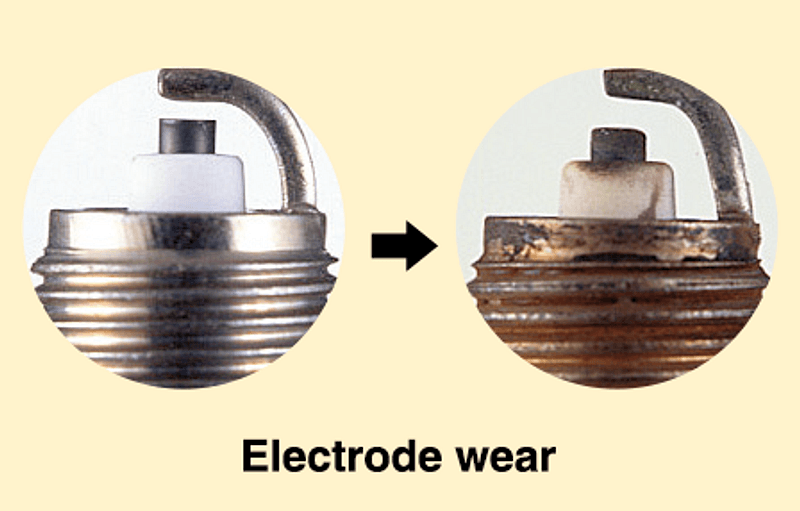
It is worth mentioning that although this wear is completely normal, there are factors such as modern driving habits, new fuel types and variable weather conditions, that can accelerate the rate of wear and will mean that the plugs will have to be changed more frequently.
Worn electrodes can cause rough engine running, misfires and starting issues, although there are also other factors related to spark plugs that cause starting issues. Under certain conditions, moisture can build up in the combustion chamber, which then gathers on the electrode, and makes it more difficult for the spark to jump the gap until the moisture is blown off.
In regions where there can be big swings in day and night temperatures for example, the phenomenon is perhaps more understandable and it can be seen when the surface of the vehicle is wet with condensation, which is roughly what happens inside the engine. This problem is made worse with the recent change in the specification of petrol from E5 to E10, which is prone to attracting higher levels of moisture. However, modern, post pandemic driving habits, which have seen vehicles used less frequently and for shorter journeys, also have a similar effect, as the engine often doesn’t reach its optimal operating temperature before it’s parked, and fuel in the tank takes longer to be used, so over time, more water accumulates in the tank. All of these issues primarily reveal themselves in engine starting difficulties and fitting fresh spark plug may be the correct solution.
In addition to replacing the plugs more frequently, there is another way to actually make the ignition more resistant to these factors, namely to upgrade the spark plug with one of a different technology.
DENSO’s patented twin tip (TT) spark plugs circumvent these issues by not only using thinner electrodes made from more durable materials such as platinum or iridium, but also by increasing their length, which reduces their surface area and means that the moisture cannot ‘hang’ on the top electrode, or ‘sit’ on the bottom one.
In addition, these thinner electrodes produce a more concentrated spark, which is more powerful and consistent across its 360 degree circumference, and maximises the combustion efficiency of the fuel/air mixture. This increases power, while reducing exhaust emissions and improving fuel consumption, as well as requiring less energy from the ignition coil. With the DENSO Iridium TT types, the benefits do not finish there however, as these hardwearing materials mean that at around 120,000km, they also have a much longer service life.
Although modern engines benefit from the use of electronic control for fuel injection, ignition and other engine related systems, which significantly reduces the risk of poor combustion compared to earlier generations, problems can still occur.
Typical Failure Modes
Despite being different symptoms, pre-ignition and knock are both caused by faults that affect the combustion process. Pre-ignition is where a hot spot in the combustion chamber can ignite the air/fuel mixture before the spark plug provides the correctly timed spark, and has the same effect as the ignition timing being too advanced. Early combustion causes premature pressure and excessive temperatures in the cylinder, which can eventually lead to more damaging detonation.
Detonation is where small pockets of air/fuel mixture are independently ignited by high pressures, after combustion has started. During normal combustion, as the flame progressively grows and spreads throughout the combustion chamber, the pressure and temperature in other parts of the chamber rise. However, during detonation, the pressure and temperature in sections where the flame has not yet reached, become too high and detonate independent of the flame. This can cause rapid pressure waves, which creates a detectable knocking or pinging noise. Prolonged detonation can cause serious engine damage, such as melting of pistons and even the exhaust valves.
Diagnosing and Fault Finding
It is important to highlight that there are various ignition related symptoms that can occur that might initially appear to be spark plug related faults, but can also be caused by other vehicle system faults or other problems that affect spark plug operation.
Therefore, when problems occur, start by making sure that the spark plugs being used are the correct type for the engine, but also check their condition. Begin with the electrodes, but also check for cracks or damage to the insulator.
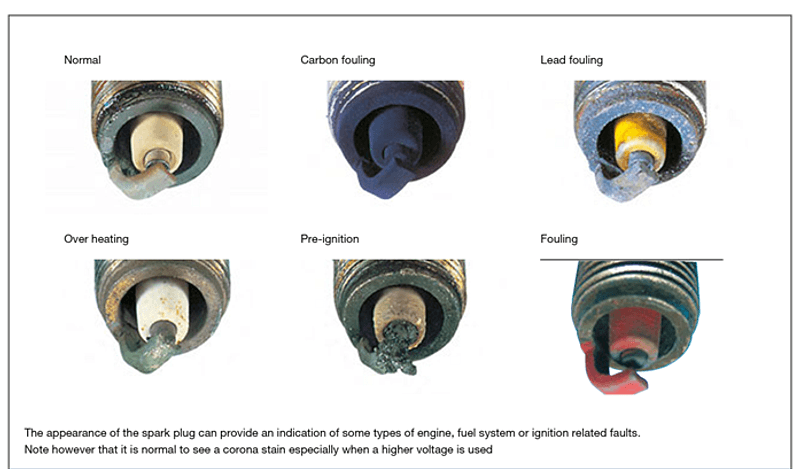
In addition, studying the electrodes, insulator nose and plug housing can reveal many ignition related problems, and is often referred to as ‘reading’ the plug. The following image demonstrates the most common findings.
However, a comprehensive selection of diagnostic tips is contained in a technical poster, which can be downloaded here.
Product Selection
When sourcing the correct replacement spark plug, it is important to clearly identify the vehicle model and engine code, its emission standard, production year and engine power output rating. Also, be aware that vehicles sold in different regions sometimes specify a different spark plug type.
Although crucial for the vehicle manufacturers, some detailed specifications may be less relevant for the aftermarket, which is why aftermarket suppliers apply a consolidation logic to make their aftermarket range more efficient. However, the skill of judging consolidation alongside quality standards varies greatly between each supplier. Therefore, it is highly recommended to only purchase spark plugs from original equipment (OE) suppliers such as DENSO, who bring their OE competences to the aftermarket, without sacrificing performance, reliability or lifespan.
To discover all there is to know about DENSO Spark Plugs, click here.
Spark Plug Installation
Further issues can arise, which relate to the torque applied to the spark plug during installation. Done properly and the gasket will not be fully compressed, but still ensure the combustion chamber is air tight during engine operation and correctly transfer the heat generated through the engine casing.
If, however, the spark plug is too tight, the gasket will be compressed beyond its tolerance and the metal housing can be deformed. If it is stretched, not only can the insulator crack or become loose, but the housing can have an adverse effect on the heat transfer through the cylinder head and engine casing affecting the engine’s thermal management.
In addition, to prevent damage to the insulator in particular, the socket used to install the spark plug must be located correctly, and should remain in parallel with the plug as it is being tightened to the correct torque value.
With this guide, and by following the principles it sets out, technicians will be able to accurately assess the condition of the spark plugs and realise that by choosing DENSO spark plugs as the replacement, engine performance will be optimised, while exhaust emissions reduced, which allows the owner to enjoy increased reliability and greater efficiency.
Would you like to learn more? Visit our e-learning platform for detailed insights and expert guidance.