



Summer Engine Misfire: Causes, Symptoms and Quick Diagnostic Guide
What is an engine misfire?
At its core, an engine misfire is simple: one or more cylinders fail to burn the air–fuel mixture correctly.
Instead of smooth, controlled combustion, the engine becomes unstable. Drivers typically notice:
- rough idle
- hesitation or jerking during acceleration
- loss of power
- or the classic check engine light
Why do misfires appear more often in summer?
Heat doesn’t create the problem. It reveals it.
Under high ambient temperatures, the engine bay becomes an extreme environment. Add air conditioning load, reduced cooling efficiency, and heat build-up around components—and suddenly, parts that were “just good enough” start to fail.
In practice, this means:
- Ignition components operate under higher thermal stress
- Materials expand and tolerances change
- Electrical systems become less stable
A component that works perfectly at 20°C may struggle at 90°C engine temperature.
What do technicians typically see?
In summer, misfires rarely appear in isolation. Workshops often report:
- rough engine running when hot
- misfires under load or during acceleration
- poor fuel efficiency
- difficult hot starts
These are classic signs of ignition instability under thermal stress, and they should immediately point the technician to the ignition system.
The real causes behind summer misfire
In most cases, the root cause is not exotic. It comes down to three areas:
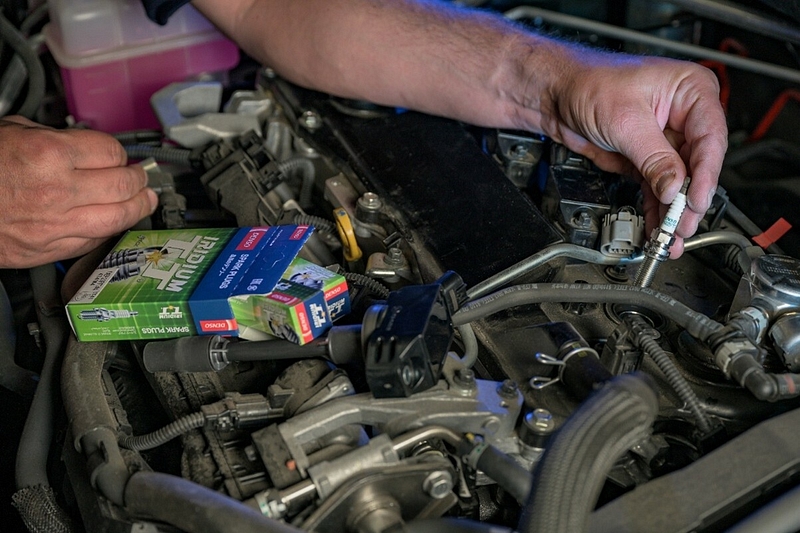
- Spark plugs: small part, big impact
Spark plugs are often overlooked, but they are the most common source of misfire.
Typical symptoms:
- rough idle
- hesitation under load
- increased fuel consumption
- difficult starting
Common causes:
- incorrect heat range
- worn electrodes (increased gap)
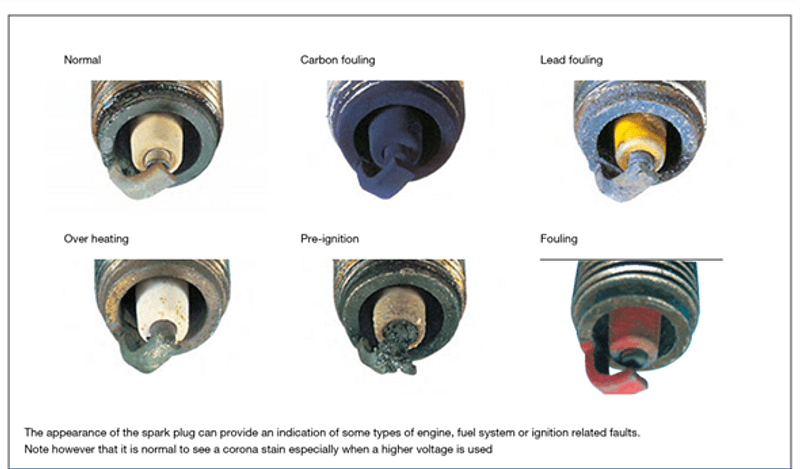
- carbon deposits or overheating
- wrong application
Here’s the key point:
A worn spark plug doesn’t always fail immediately. But under heat, the required ignition voltage changes and combustion conditions become less forgiving. What was “acceptable” suddenly becomes a misfire.
Why it matters
Incorrect or worn plugs can:
- increase load on the ignition system
- reduce spark stability
- trigger repeated or intermittent misfires
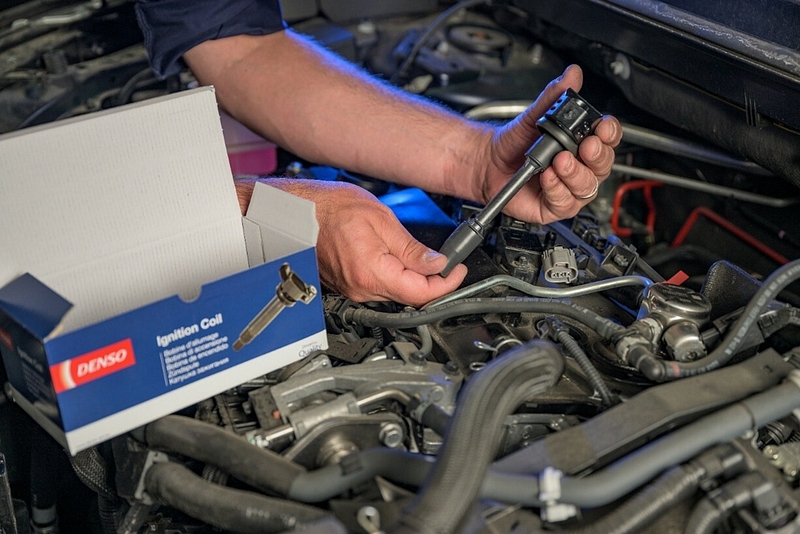
2. Ignition coils: heat is their enemy
If the plugs check out, the next suspect is the ignition coil.
Typical symptoms:
- misfire on a specific cylinder
- hesitation under load
- rough running when hot
- intermittent behavior
Ignition coils rely on stable internal insulation and consistent electrical performance. Over time, heat cycles degrade both.
As temperature rises, internal resistance increases and small defects become critical leading to weak or inconsistent spark delivery.
Important workshop insight:
Worn spark plugs often accelerate coil failure, because the coil must work harder to generate the required voltage.
3. Installation errors: the hidden cause
Not all misfires are caused by faulty parts.
Incorrect installation is a surprisingly frequent reason, especially in high-temperature conditions.
Common mistakes include:
- incorrect tightening torque
- poor heat transfer due to under-tightening
- contamination in the spark plug bore / housing
- incorrect seating
Why it matters:
- Over-tightening can damage the insulator
- Under-tightening prevents proper heat dissipation
- Poor sealing affects combustion stability
These issues often go unnoticed—until heat pushes the system beyond its tolerance.
Diagnosing the problem correctly
Efficient diagnosis is about recognizing patterns.
Symptom > Likely cause
Misfire on one cylinder > Ignition coil
Misfire across multiple cylinders > Spark plugs
Misfire only when hot > Coil or installation issue
Rough idle + poor fuel economy > Worn spark plugs
A practical diagnostic approach
In the workshop, a simple structured process works best:
Step 1 – Check spark plugs
- correct type and heat range
- wear condition and deposits
Step 2 – Check ignition coils
- identify cylinder-specific faults
- test or swap coils if needed
Step 3 – Verify installation
- correct torque
- proper seating
- clean, dry plug bore
This approach avoids unnecessary replacements and reduces repeat repairs.
Preventing summer misfires
A “summer misfire” is rarely a sudden failure. It is usually the result of:
- worn or incorrect spark plugs
- ignition coils weakened by heat
- or small installation errors that only appear under stress
For workshops, the message is clear: Heat does not create faults - it exposes them.
By focusing on correct component selection, proper installation, and systematic diagnosis, technicians can:
- reduce comebacks
- improve engine performance
- and deliver reliable repairs, especially during the summer peak season
Choosing high-quality ignition components, such as DENSO spark plugs and ignition coils, helps ensure stable combustion, reliable performance, and long-term system durability, even under demanding summer conditions.