



Glow plug replacement best practice from DENSO
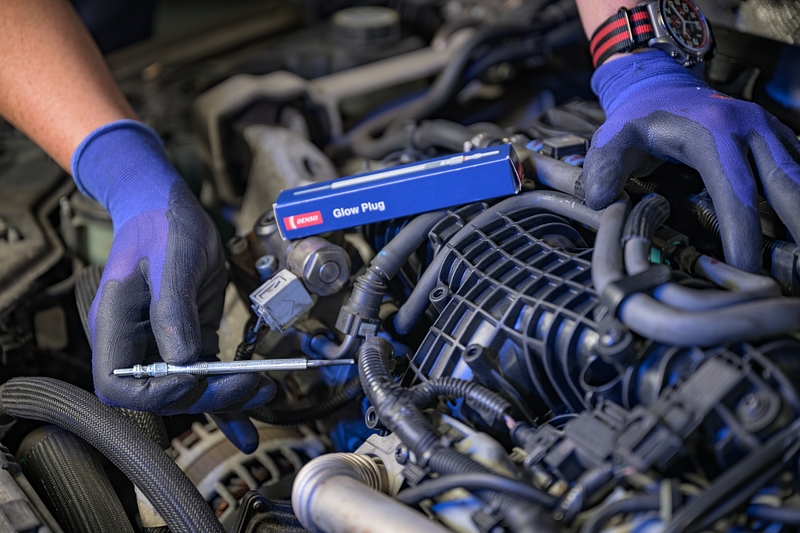
Due to the fact that the fuel/air mixture in a diesel engine spontaneously combusts when under high pressure in the combustion chamber, it requires no spark. However, the primary role of the glow plug is to aid the starting process by heating up the mixture, when the engine is cold.
Developed in the 1920s, the design remained largely unchanged until the 1970s when the external coil technology was superseded by a covered coil, which persists with modern glow plugs today. However, under the surface, the initial covered single coil glow plugs of the 1970s were relaced by double coil versions in the 80s, by ceramic glow plugs in the 90s and instant heating glow plugs in the 2000s, the design that remains current today.
Unlike spark plugs, which are subject to vehicle manufacturer (VM) specified replacement intervals, glow plugs generally have no such stipulation, so how do technicians know when they should be replaced?
As with any vehicle component, the glow plug has a lifespan, which would broadly be defined by the number of heat cycles it can go through before it starts losing performance. This is very difficult to correlate with the distance a vehicle travels annually, because it is really associated with the number of engine starts (and latterly diesel after treatment cycles), the glow plugs have to activate for, rather than the distance the vehicle has travelled.
What is for certain is that recent, post pandemic driving habits of fewer journeys and of a reduced distance, has had a disproportionate impact on diesel fuelled cars over their petrol fuelled cousins, and this is largely because of the thermally efficient nature of the diesel engine, and the time it takes to reach its designed operating temperature.
As it is fundamentally the temperature of the oil that accurately defines the temperature of the engine, and the oil can often take 20 or more kilometres of driving to reach its optimal temperature, this has big implications on the performance of the engine, including the glow plugs. The more cold starts they make without then reaching their designed engine operating temperature, the faster they will wear out.
Making matters worse, because the glow plug now has a role in the diesel particulate filter regeneration process, to temporarily raise the temperature of the exhaust gases so they can burn off the soot captured in the filter, they have to work extra hard on vehicles that only travel short distances to activate the process that would happen naturally during the course of its use in a vehicle that travelled longer distances. In short, although vehicles are typically being used less, the glow plugs are having to work harder, which means they need to be replaced more frequently.
As a result warning signs of potential glow plug problems range from having trouble starting the engine from cold, to an inability to successfully regenerate the particulate filter. So, despite being a relatively small component, glow plugs have a big influence on the performance of the engine, which is why having premium quality products from a renowned original equipment (OE) manufacturer, such as DENSO, is so important.
Additional evidence concerning glow plug problems, or their complete failure, can also be identified through diagnostic checks during exhaust emission testing, for example, as well as through warnings on the vehicle’s dashboard.
Fault finding
As a general rule, the majority of glow plug failures are caused by excessive voltage and/or heat. Although designed to operate between 850 to 1,100 degrees centigrade, when the electrical current to the glow plug is held too long, because of a faulty relay and/or controller, it can lead to overheating, which will cause the glow plug to swell, split or burst and result in immediate failure. Therefore, before replacing a failed glow plug, it is advisable to check the entire electrical ignition system to identify the underlying fault. Overly advanced injection timing, leaky injectors, or diesel running in the engine will cause the combustion temperature to increase too much, which can also damage the glow plugs. So, finding faults quickly will help to minimise engine damage.
What are the most common symptoms of a glow plug fault?
An engine warning light is the first indicator that there could be a fault in the glow plug or heat temperature sensor
Difficulty in starting the engine, especially in cold conditions, is an indication that the glow plugs aren’t warming up quickly enough.
If, when idling, the engine starts to produce white smoke from the exhaust, it could indicate that the glow plugs have burned out. This is especially noticeable under cold start conditions.
Conversely, black smoke coming from the exhaust, or an increase in fuel consumption, can both also be indicators of glow plug faults
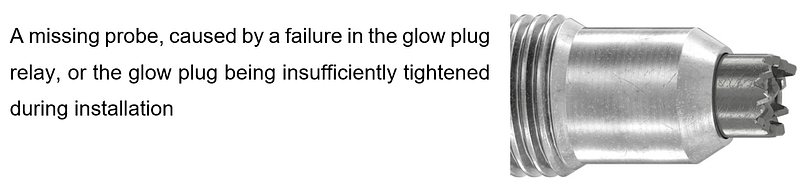
What are the most common glow plug faults?

.

.

.

.
.

.

Installation
Although installation problems include over and under torquing of the glow plugs into the cylinder head, one best practice tip that is often overlooked, is to use a thread tapping tool on the threads before fitting the replacement glow plugs.
The reason that this is an important step to take is because of the carbon deposits that naturally build up around the top of the exposed section of the glow plug and the bottom of the thread, in the combustion chamber. Clearing these deposits prior to fitting the replacement glow plugs, therefore, ensures that they screw in properly and without unnecessary resistance, ready for their final tightening to the VMs specific torque value.
Range and availability
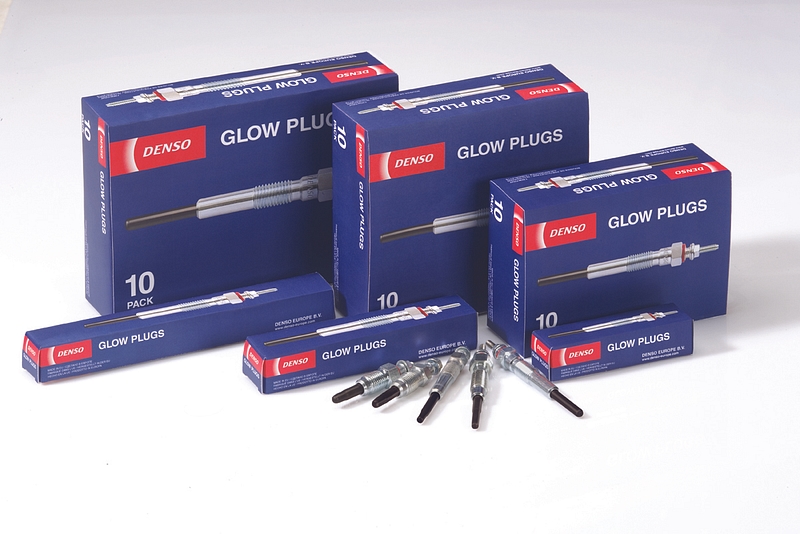
The OE quality glow plugs in the DENSO Aftermarket range provide the independent service and repair sector with a comprehensive range of replacement options for the vast majority of the European vehicle parc and is widely available from its distribution partners across Europe.