



Nickel, Platinum, Iridium? How Spark Plugs Differ
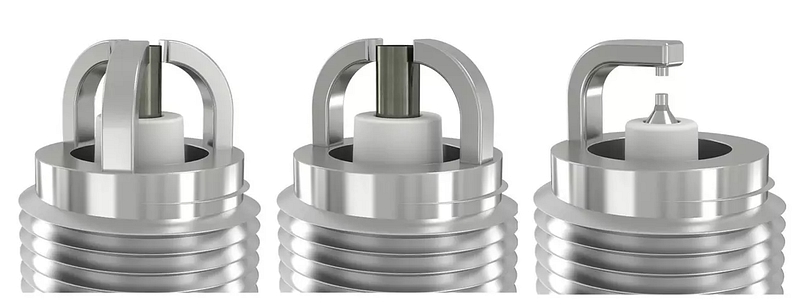
Advantages of multi-electrodes
Spark plugs with two, three, or four electrodes have a longer lifespan, but they don't increase performance.
Spark plugs with multiple ground electrodes – three, for example, – are installed in many vehicles. The main reason for using multiple ground electrodes is to extend their service life. Since the ignition only jumps to one electrode at a time, never to several simultaneously, the service life of spark plugs can be increased simply and effectively with multiple electrodes. Nickel multi-electrodes offer two to three times the service life of single electrode plugs, without increasing performance. For many aftermarket applications, they are therefore an economically viable solution. Three nickel electrodes are cheaper than an iridium or platinum solution and are easier to manufacture.
Not suitable for modern engines
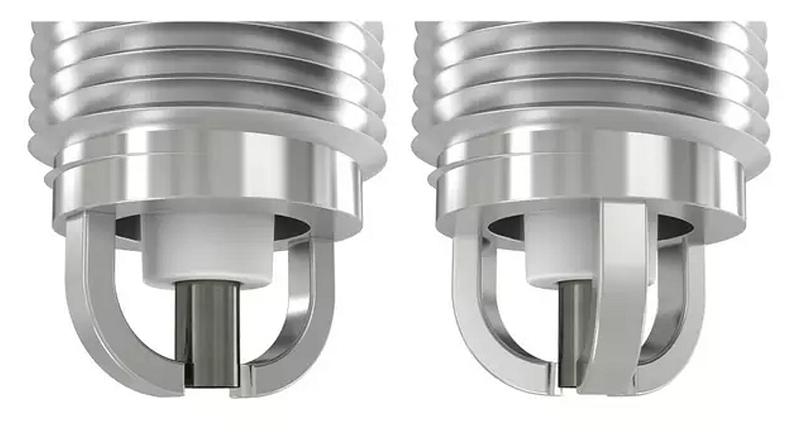
Multiple electrodes, however, present engine developers with new challenges: With plugs that have three ground electrodes, it is unpredictable which of the three the spark will jump to. The ignition point therefore varies slightly. The exact position of the ignition hotspot cannot be clearly defined, which makes targeted combustion optimisation difficult. Therefore, multi-electrode designs are now considered outdated. For modern vehicles that must meet stringent emissions and performance requirements, multi-electrode spark plugs are unsuitable due to their imprecise ignition timing. Therefore, all modern engines use platinum or iridium alloys to meet the demands of a long service life.
Platinum or iridium electrodes?
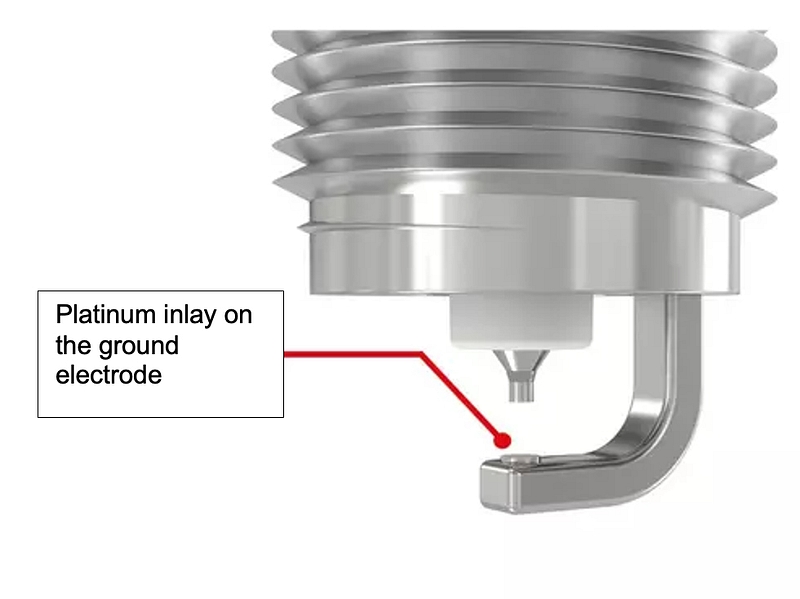
Platinum spark plugs are significantly more durable. They represent a middle ground between economy (nickel) and top performance (iridium).
A step above simple spark plugs with nickel electrodes are those with a platinum chip: To extend their service life, a small platinum chip is welded onto the nickel electrode, which absorbs most of the erosion caused by spark discharges. This design protects the electrode from mechanical and thermal wear and ensures consistent ignition performance over a longer period.
Spark plugs with a platinum chip ground electrode are always combined with a platinum or iridium centre electrode. This material pairing ensures stable ignition even under demanding operating conditions. From an ignition performance perspective, this is a significantly better solution than a conventional nickel multi-electrode. The platinum chip offers optimised spark guidance and reduces wear on the ground electrode – an advantage that pays off particularly with longer service intervals.
Iridium super ignition
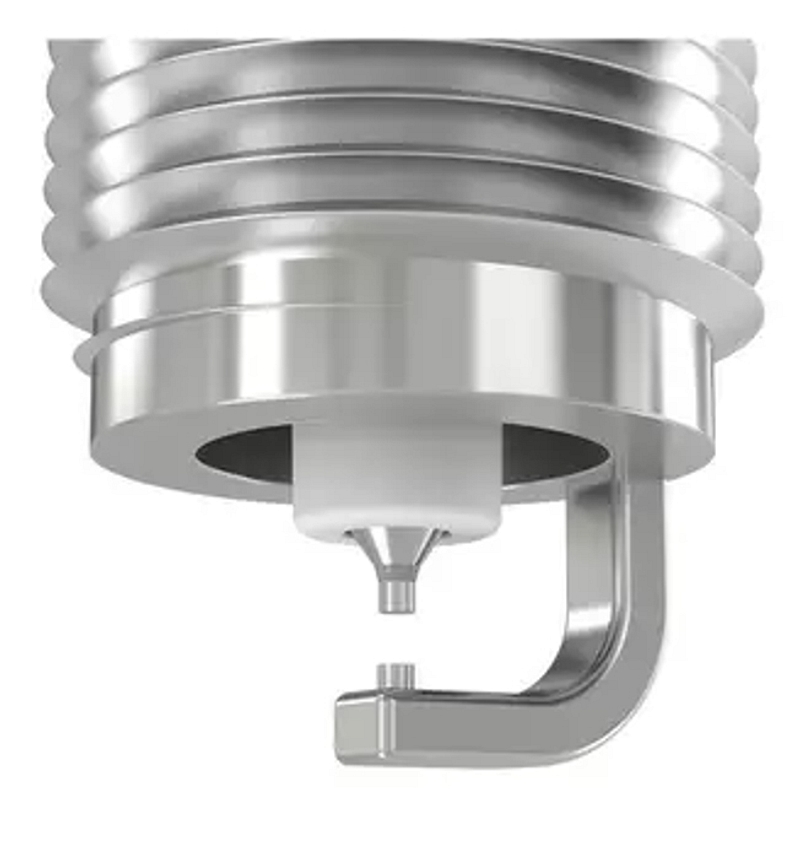
Iridium spark plugs have exceptionally fine centre and ground electrodes. This enables strong sparks under all conditions.
For applications with the highest ignition performance requirements, DENSO has developed super ignition plug technology. This utilises an exceptionally fine iridium centre electrode with a diameter of only 0.4 mm. On the ground electrode is a precisely shaped needle made of iridium or platinum with a diameter between 0.7 and 1.0 mm, creating a point-to-point ignition. The advantage lies in the reduced mass that the ignition coil needs to charge: The spark only jumps a very small area, meaning that even small amounts of energy are sufficient to generate reliable ignition. Furthermore, the very fine ground electrode enables a unique reduction in the extinction effect and ensures unrestricted flame growth. This improves ignition stability, especially during cold starts or under high load.
This combination of a fine centre electrode and needle structure on the ground electrode is a key feature of DENSO's Iridium TT spark plug, which was developed specifically for the aftermarket. It combines OE technology with broad vehicle compatibility and is available for numerous models.
Electrode gap check no longer necessary
Another positive side effect concerns the electrode gap. With conventional nickel spark plugs, it was standard practice to precisely check the gap between the centre and ground electrodes before installation and, if necessary, readjust it with a feeler gauge – often to a tenth of a millimetre. This adjustment was crucial for stable ignition, especially in older vehicles.
Modern iridium spark plugs like the DENSO Iridium TT are significantly more tolerant in this respect. The high energy density of the ignition coil is sufficient to ensure a reliable spark even with slightly varying gaps, simplifying installation and reducing the risk of errors. Furthermore, the manufacturer advises against adjusting the gaps on these iridium spark plugs, as this can damage the delicate electrodes.
Comparison of materials
Laboratory tests reveal the varying rates of flame front propagation under otherwise identical conditions.
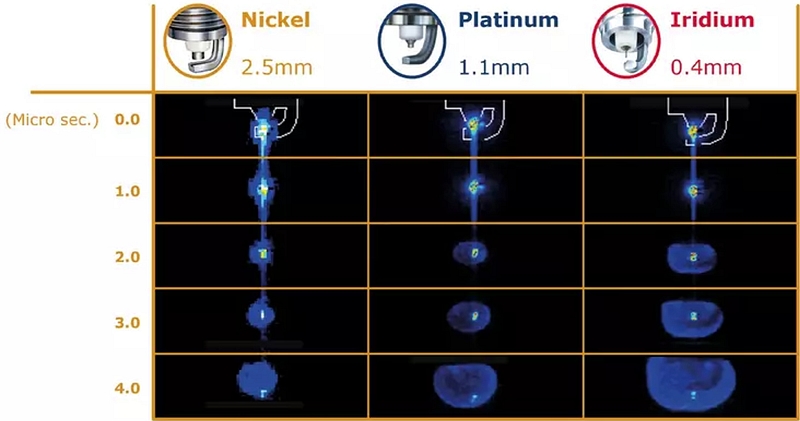
Positioning the spark plug electrodes directly in the combustion chamber exposes them to extreme thermal and mechanical stresses. High temperatures, pressure peaks and rapid changeover cycles require materials that function reliably for millions of combustion cycles – up to 180,000 kilometres for some spark plug types.
Graduated material strategy
Nickel is the proven standard material with a typical electrode diameter of 2.5 mm. It offers solid ignition performance and is cost effective, but its limitations are reached by increasing thermal demands.
Platinum is characterised by high temperature resistance and oxidation resistance. A welded on platinum tip allows for a reduction of the electrode diameter to approximately 1.1 mm and significantly extends its service life compared to nickel. Platinum solutions were particularly widespread in the 1980s and 1990s, but have been increasingly replaced by iridium solutions. Iridium is the hardest and most temperature resistant material ever used in spark plugs.
DENSO uses a patented iridium-rhodium alloy that offers comparable oxidation resistance to platinum. Thanks to innovative manufacturing technologies, including a 360° laser welding process, centre electrodes with diameters of just 0.7 mm, 0.55 mm, or even 0.4 mm can be produced. These fine electrode geometries enable pinpoint ignition with reduced energy consumption. At the same time, flame propagation is less obstructed and heat dissipation from the pilot flame is minimised, reducing the so called quenching effect and improving combustion efficiency.
Another advantage: The precious metals used have a very low electrical resistance that remains constant even under harsh operating conditions. This ensures that the ignition coil can reliably generate a strong spark throughout the entire lifespan of the spark plug, even under high engine loads and demanding driving conditions.