



DENSO Engine Cooling System Advice - Radiators
Original equipment heritage
DENSO is a thermal management specialist and a trusted original equipment (OE) supply partner for many vehicle manufacturers, which means it is not only able to provide expert advice to help professional technicians diagnose faults and make an efficient repair, but it also has the premium quality replacement products that they need.
Aftermarket solutions
Although each component within the engine cooling system is vital, the heat exchanging elements are fundamental. Therefore, when they fail, only premium quality replacement parts, like those supplied by DENSO, should be fitted.
Radiator overview
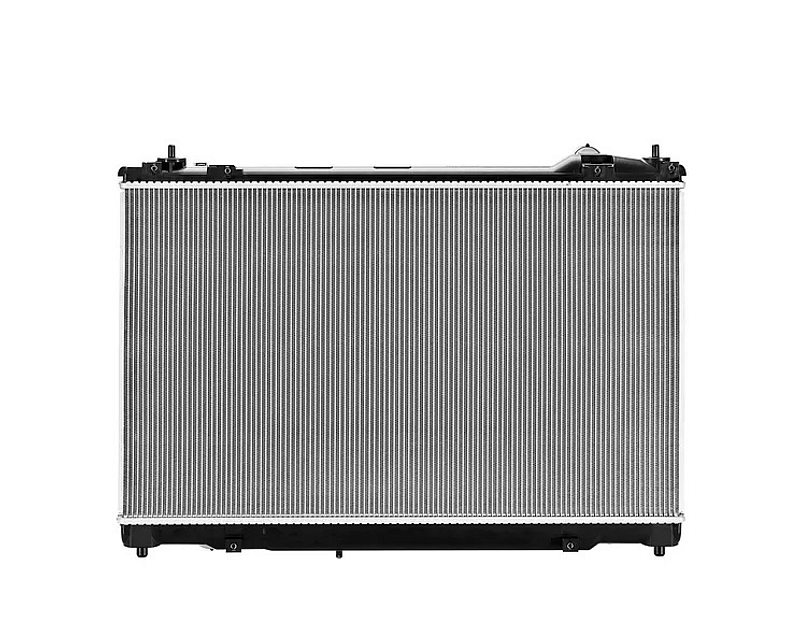
The architecture of a radiator is complex, as it contains a matrix of small aluminium tubes through which the hot engine coolant passes to be cooled. To aid the process, these tubes feature thin fins, which increase their surface area and maximise the transfer of heat out of the coolant to the air passing through the radiator, by convection.
DENSO radiators
Incorporating its specialist thermal management knowledge, DENSO’s radiators set the standard, not only in their quality, but also in their design and construction. This makes them so efficient, that an example with a frontal area of only 0.2m2, actually has a cooling surface area of 6m2!
Smaller, lighter and more efficient
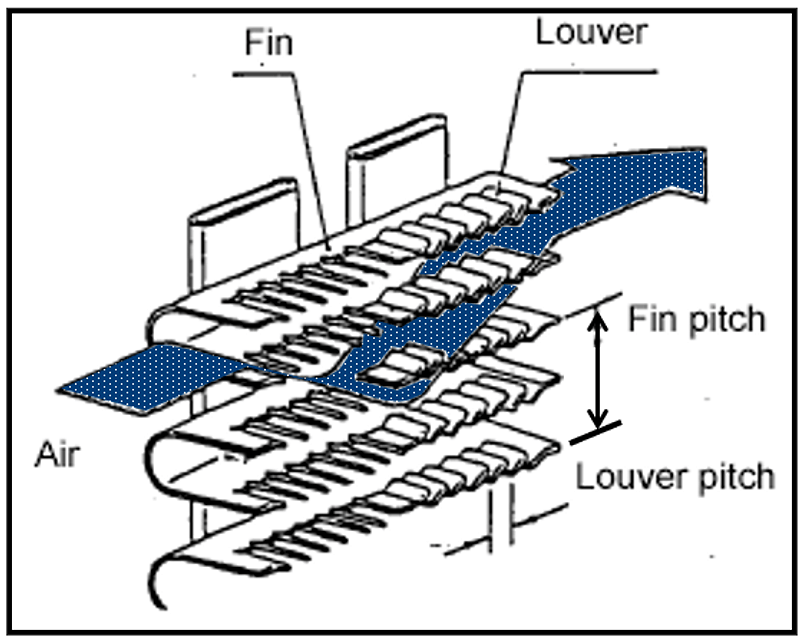
Using an example developed for an OEM, the higher heat radiation efficiency of a revised DENSO radiator allowed its thickness to be reduced from its original 27mm to just 16mm, while still delivering equal performance to the previous design, delivering a substantial size and weight reduction.
The performance of a radiator depends on its two major components - fins and tubes. The more efficient heat radiation of this radiator was achieved through improvements in the design of the fins. DENSO increased the amount of louvers that are located on the surface of the fins per unit area. This design change allowed the radiator to have 10% more efficient heat radiation than DENSO's conventional radiators despite being 40% smaller and lighter than the previous models.
Quality materials
In addition, quality products always specify the type of plastic they are made of, which is why DENSO always follows this principle. The plastic used in its radiators is normally PA30LF, which is polyamide (PA) with 30% long glass fibres (30LF). Inferior products often do not provide any information, or are made from PP20SF, i.e. polypropylene with 20% short glass fibres. Both products look similar, but in terms of performance, safety and service life, the DENSO product outperforms the cheaper product by a factor of two.
Comparison tests
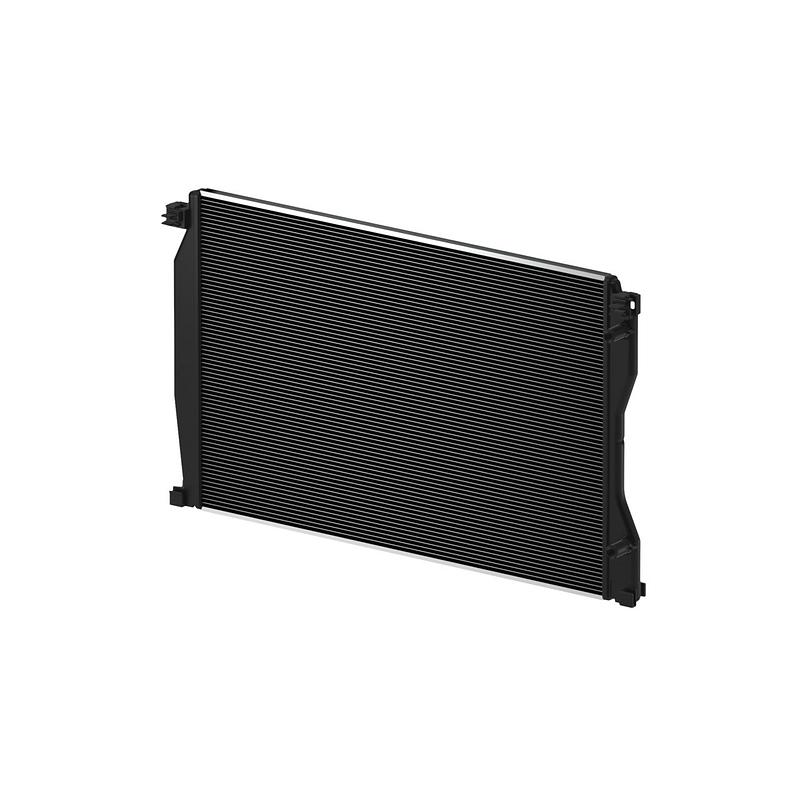
Tests using a typical, cheap aftermarket radiator, in comparison to a DENSO OE radiator, revealed that at air flow speeds of three, six and nine square metres per second, where the DENSO radiator performed with 100% thermal energy extraction across the speed ranges, the cheap version averaged 21%, 33% and 35% less efficiency respectively.
When it comes to determining the service life/resistance of these radiators, and using 100,000 pressure cycles as the minimum standard, the DENSO radiator averaged 176,365, whereas the cheap radiator did not even reach the standard, averaging only 78,550 cycles.
Conclusion
Using these two standard checks, it’s clear that cheap products do not only deliver the quality required by independent workshops undertaking radiator replacement. They fail in both their thermal extraction efficiency and load cycle tests, while DENSO OE radiators easily exceed the required standards and are likely to last two to three times longer.
As a result, it is fair to state that cheap radiators fall far short of the required product specifications and performance parameters, which means that DENSO radiators not only deliver quality and efficiency, but also are the more cost effective option over the medium to long term.
Further details of the DENSO Aftermarket programme are available online at: www.denso-am.eu